
flowers Line
Adventure, strength, and the call of the wild.
Flowers Line
Embrace the quiet beauty of nature. Inspired by wild blossoms, this collection blends softness, refinement, and effortless style.

Flowers Line

Flowers Line
Flowers Line
Arnica Montana
Short Description
Arnica montana is a perennial herbaceous plant belonging to the Asteraceae family, widely known for its therapeutic properties and long-standing use in herbal medicine. Its bright yellow, daisy-like flowers have made it a symbol of traditional mountain remedies, especially across the Alps, Apennines, and Carpathians.
Botanical Description
Arnica montana is a hardy plant that thrives in alpine and mountainous environments, typically growing at high elevations in poor, well-drained soils.
• Stem: Upright and slightly hairy, reaching heights between 20 and 60 cm. It often branches near the top where the flowers develop.
• Leaves: Broad, lance-shaped, and dark green, mainly arranged in a basal rosette. Upper leaves are narrower and gradually reduce toward the stem’s tip.
• Flowers: Bright yellow flower heads resembling daisies, with pointed petals surrounding a darker golden center. Each bloom measures about 5 cm in diameter and typically flowers from June to August.
• Roots: Thin but resilient rhizomatous roots that contain a significant concentration of the plant’s active compounds.
Habitat and Distribution
Arnica montana grows primarily in alpine and pre-alpine regions at elevations between 1,000 and 2,500 meters. It prefers gravelly soils, mountain meadows, pastures, and forest edges with good drainage and calcium-rich ground.
It is especially common in the Alps, Apennines, Carpathians, and parts of Northern Europe such as Germany and France. Adapted to cold climates and nutrient-poor soils, it competes well with larger plant species.
Therapeutic Properties
Arnica is best known for its anti-inflammatory, analgesic, and hemostatic effects. Its active compounds—including sesquiterpene lactones, flavonoids, and polyphenols—support a variety of traditional treatments.
Common uses include:
1. Bruises and trauma: Helps reduce swelling, relieve pain, and speed up the reabsorption of trapped blood.
2. Muscle and joint pain: Often used for sprains, tendonitis, arthritis, and post-workout soreness.
3. Sports recovery: Popular among athletes for easing cramps and physical strain.
4. Wound healing: Supports tissue repair and offers mild antiseptic benefits for minor cuts and abrasions.
5. Circulatory support: Sometimes applied to improve microcirculation and relieve swelling or varicose veins.
Preparations and Uses
Despite its benefits, Arnica montana can be toxic if ingested in large amounts, potentially causing gastrointestinal irritation, vomiting, diarrhea, and in severe cases, cardiac issues.
It should never be applied to broken skin or open wounds, as it may trigger irritation or allergic reactions. Always use properly diluted commercial products and consult a healthcare professional before internal or prolonged use.
Conservation
Arnica montana is a protected species in many regions because excessive harvesting threatens its survival in the wild. As a result, most arnica-based products now come from controlled cultivation rather than natural collection.
Conclusion
Arnica montana is a plant renowned for its powerful healing properties, particularly for treating bruises, muscle pain, and inflammation. Its vivid yellow flowers and deep roots in traditional mountain medicine make it a highly valued natural remedy. However, it must always be used responsibly and under expert guidance to avoid unwanted effects.
Flowers Line
Stella Alpina
Introduction
Edelweiss (scientific name: Leontopodium Nivale) is one of the most iconic and symbolic flowers of the Alps and Dolomites, and more broadly of Europe’s mountain regions. Its beauty, remarkable resilience to harsh conditions, and deep connection to alpine culture make it a plant admired by hikers, botanists, and nature enthusiasts alike.
Botanical Description
Edelweiss is a perennial herbaceous plant belonging to the Asteraceae family, easily recognized by its distinctive shape and unique appearance.
• Stem: Typically grows between 10 and 30 cm tall, depending on environmental conditions. The upright stem is covered in dense silvery hairs, giving it a soft, grayish, velvety look.
• Leaves: Lance-shaped with slightly toothed or wavy edges, often coated with a fine layer of hair that creates a textured feel. Basal leaves are larger and form a rosette, while upper leaves are smaller and more tapered.
• Flowers: The plant’s defining feature is its star-shaped inflorescence. Tiny white or yellow flowers sit at the center, surrounded by woolly, petal-like bracts that create the appearance of a six-pointed star. These bracts are modified leaves that protect the central flowers, and their pearly white color makes Edelweiss instantly recognizable.
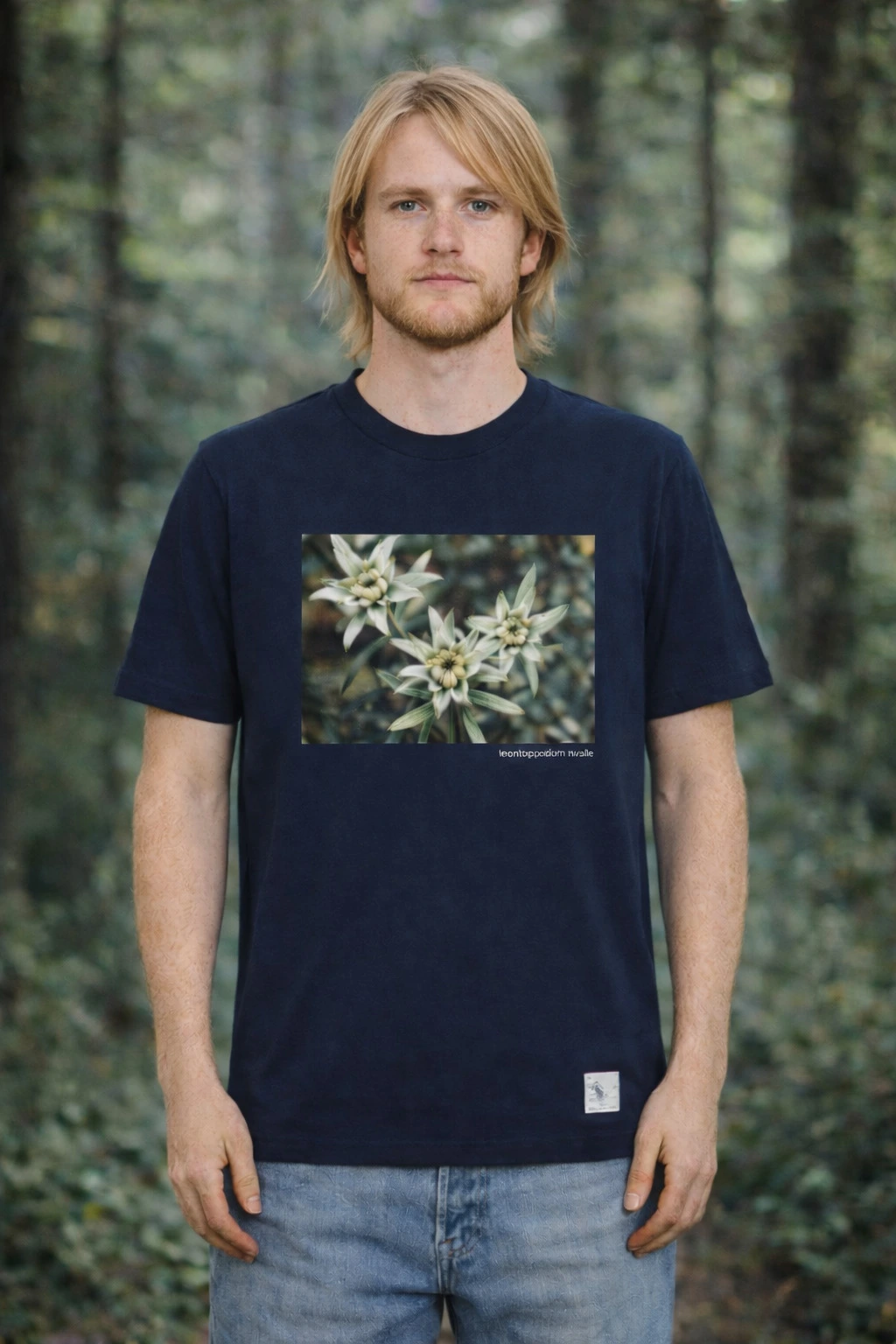
Leontopodium Nivale
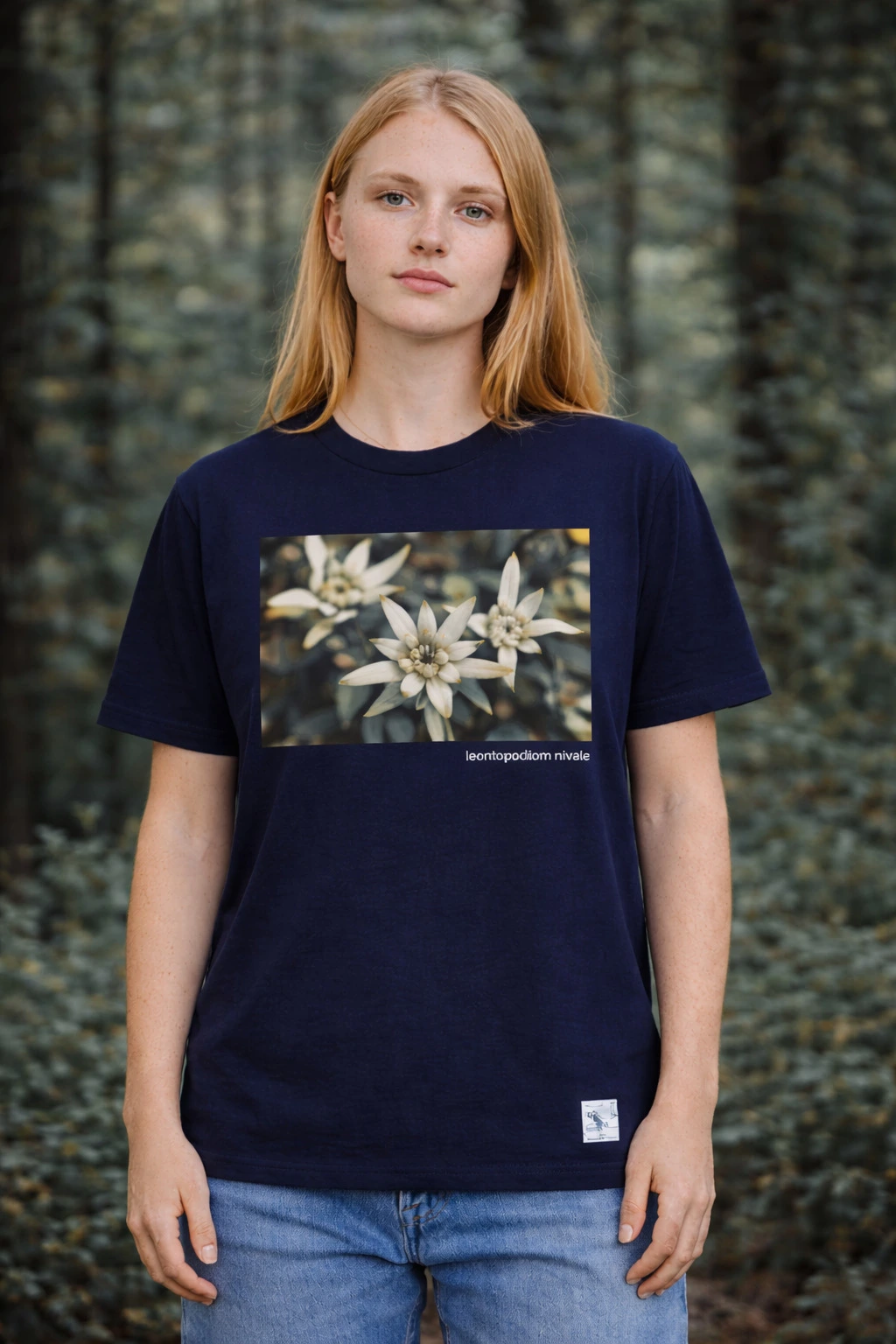
Leontopodium Nivale